How to Orchestrate Multiple AI Coding Agents Without Losing Control
A practical architecture for coordinating AI coding agents across planning, implementation, review, testing, and human approval.

On this page
Multi-agent orchestration is useful when one software task contains genuinely different kinds of work: planning, repository changes, testing, security review, and release control. The goal is not to create a room full of bots. It is to give each specialist a bounded job, pass only the context it needs, and keep code and approvals inside a traceable workflow.
A single capable coding agent is enough for many tasks. Add more agents only when specialization, parallel work, or an independent review path creates measurable value. Every extra agent also adds latency, model cost, state, and another place where the workflow can fail.
Start with the work graph, not the cast of characters
“Architect,” “coder,” and “reviewer” are convenient labels, but names do not create a system. Begin by drawing the states a change must move through:
Validated request
      ↓
Implementation plan
      ↓
Isolated code change
      ↓
Automated checks
      ↓
Independent review
      ↓
Human approval
      ↓
Merge or return with evidence
Each arrow needs a machine-readable contract. What input is required? What output is accepted? What can the next step do? What happens when the result is incomplete?
When multiple agents are justified
The official OpenAI Agents SDK documentation describes two broad orchestration choices: let an LLM decide which specialist to use, or define the flow in code. LangChain’s multi-agent guidance similarly emphasizes context management, specialization, parallelization, and sequential constraints.
That leads to four practical reasons to split the work:
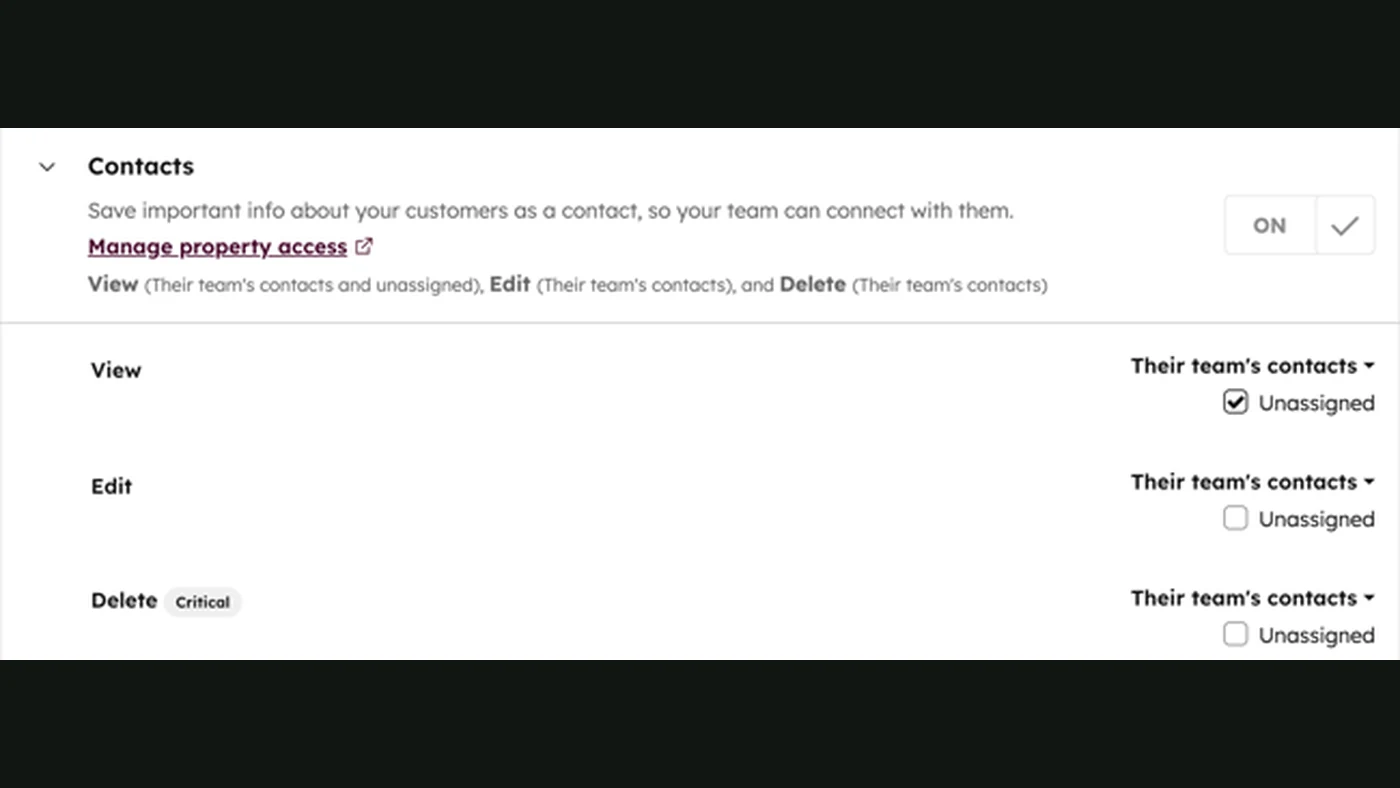
- Different tools or permissions. A planning agent may read issues and documentation but have no write access. An implementation agent may write only inside a workspace. A release step may be the only component allowed to interact with deployment systems.
- Different context. The reviewer needs the acceptance criteria, diff, and test output—not the implementer’s entire internal transcript.
- Independent evaluation. A fresh review path can test the result against explicit requirements instead of merely agreeing with the approach that produced it.
- Safe parallelism. Independent investigations, such as tracing frontend and backend behavior, can run at the same time and merge into one plan.
Do not split a short linear task merely to claim a multi-agent architecture. If one agent can inspect, change, test, and explain a small patch reliably, a second agent may add ceremony rather than quality.
Pattern 1: A manager calls specialists as tools
In a manager pattern, one agent owns the final result and invokes specialists for bounded work. OpenAI documents this as “agents as tools.” It is useful when one coordinator should retain the user conversation, combine results, and apply common rules.
A software manager might call:
- a repository investigator to locate relevant code;
- a database specialist to assess migration risk;
- a test specialist to propose missing cases;
- a security specialist to review the final diff.
The manager should not pass the whole conversation automatically. Give each specialist a short task contract and require structured output. For example:
{
  "task": "Review the authentication diff",
  "acceptance_criteria": ["No token in logs", "Expired session rejected"],
  "allowed_inputs": ["diff.patch", "auth-policy.md", "test-results.json"],
  "output_schema": ["finding", "severity", "evidence", "recommended_change"]
}
This keeps coordination legible and makes it possible to reject malformed or unsupported findings.
Pattern 2: Handoffs between active specialists
In a handoff pattern, one agent transfers control to another. This fits a conversation that moves between domains—for example, triage to billing or support. It is less natural for a software release where one control layer should usually retain ownership of state and evidence.
If handoffs are used, define exactly what history the next agent receives. OpenAI’s documentation notes that input filters can reshape handoff context. This matters because tool traces and long transcripts can overwhelm the specialist or expose data it does not need.
For coding work, we generally prefer a manager or code-defined graph over free-form peer handoffs. The workflow remains easier to replay, monitor, and stop.
Pattern 3: A code-defined graph
When release order matters, route with code. LangGraph models workflows through state, nodes, and edges and supports durable execution and human-in-the-loop control. You do not need LangGraph specifically, but you do need the same concepts:
- a versioned state schema;
- named steps with defined inputs and outputs;
- explicit conditional branches;
- retry and timeout limits;
- checkpoints before consequential actions;
- an audit record that survives a worker restart.
A useful graph can still contain agentic nodes. The planner may choose an implementation strategy, while code decides that tests must pass before review and that only a person can approve production deployment.
A minimal three-role architecture
1. Planner
The planner receives a validated issue, repository map, relevant architecture notes, and acceptance criteria. It returns:
- the intended behavior;
- files or components likely to change;
- migration and compatibility risks;
- required tests;
- questions that block implementation.
It should not write code by default. This separation makes planning inexpensive to rerun and prevents an early guess from silently becoming a code change.
2. Implementer
The implementer receives the approved plan and an isolated workspace. It may search the repository, edit allowed paths, run approved commands, and create a patch. It returns:
- the diff;
- commands executed;
- test and build results;
- assumptions and incomplete checks;
- any request to expand scope.
It should not merge its own work or gain production credentials.
3. Reviewer
The reviewer receives the original requirements, final diff, and verification evidence. It should not receive a summary that hides the actual change. The output should be a list of findings tied to files, lines, requirements, or failing checks.
The reviewer is not a replacement for static analysis, type checking, or tests. It complements deterministic checks by looking for missing behavior, unsafe assumptions, and requirements that the implementation ignored.
Shared memory without a shared mess
The original article brief proposed putting all communication into a vector database. That is sometimes useful for retrieval, but it is not the default answer to workflow state.
Use different stores for different jobs:
| Information | Better home |
|---|---|
| Current run state and step outputs | Transactional database or workflow checkpoint |
| Source code and changes | Git repository and isolated worktree |
| Requirements and acceptance criteria | Issue tracker plus versioned specification |
| Long documentation search | Search or retrieval index with source references |
| Commands, tool calls, cost, and failures | Trace and audit log |
| Stable project instructions | Version-controlled instruction files |
Retrieval should return evidence with a source and version. An embedding match is not permission to overwrite an explicit current requirement.
Stop loops before they burn time and budget
Reviewer–implementer loops need hard boundaries. Configure:
- a maximum number of revisions;
- a wall-clock timeout;
- model and tool-call budgets;
- duplicate-output detection;
- a list of non-retryable failures;
- human escalation with the latest diff and unresolved findings.
Three retries is not a universal rule. A single retry may be appropriate for a high-risk migration; more may be acceptable for a reversible formatting task. The limit should match the cost and consequence of the work.
Guard every tool boundary
OpenAI’s guardrail documentation distinguishes checks on initial input, final output, and individual tool calls. In a multi-agent system, tool-level checks are especially important because an agent-level guardrail may not run around every delegated action.
Before a tool executes, validate:
- the agent identity and current workflow state;
- the requested path, command, domain, or resource;
- whether the action is read-only, reversible, or consequential;
- the credential scope;
- the expected output schema;
- the remaining budget and time.
After execution, record the result and verify that the action changed only the expected resources.
Measure the system, not the demo
Track outcomes across completed tasks:
- percentage of runs that end in an approved change;
- human review time;
- defects found after merge;
- retries and escalations per task;
- model and infrastructure cost per accepted change;
- time from validated issue to review-ready patch;
- permission-expansion requests;
- failures by workflow step.
The right question is not “How many agents did we run?” It is “Did the system produce a reviewable change with less total effort and no reduction in control?”
A safe rollout sequence
- Begin with one repository and one low-risk task class.
- Keep the final output as a draft pull request.
- Require the same tests and review as human-authored code.
- Log every command, file change, model call, and policy decision.
- Add a reviewer agent only after the implementation loop is stable.
- Add parallel specialists only where timing data shows a benefit.
- Expand permissions and task classes gradually.
Bottom line
Multi-agent development works best as a controlled workflow containing specialized reasoning—not as an unstructured conversation among personas.
Keep orchestration deterministic where order and safety matter. Give each agent a narrow tool set, pass compact evidence instead of full transcripts, persist workflow state outside the model, stop repeated failures, and reserve merge and deployment authority for explicit policy and human approval.
If you are still deciding whether the task needs several agents at all, start with AI Agents vs. Workflows. Before any specialist receives tools or credentials, define the controls in AI Access Control: Identity, Permissions, and Approvals for Agents.
Want FollowAI to build this for your business?
Describe the repetitive task, the systems involved, and what a successful completed result looks like.
Describe your goal in our project assistant. It will clarify the result and the service you want, then offer a project discussion with the FollowAI team.
Discuss my projectShare contact details when you want the team to follow up. Scope and pricing are confirmed by the team.
Or email hello@followai.proChat with the team on WhatsAppSources
- OpenAI Agents SDK: Agent orchestrationOfficial documentation
- OpenAI Agents SDK: GuardrailsOfficial documentation
- LangChain: Multi-agent patternsOfficial documentation
- LangGraph overviewOfficial documentation